
Nepal Was the Door, Iran Is the Room: The Real Question Behind India's 48-24 Win
**সংক্ষিপ্ত উত্তর (≤৬০ শব্দ):** এশিয়ান Games ২০২৬-এর মহিলা কাবাডি সেমিফাইনালে ভারত নেপালকে ৪৮-২৪-এ হারিয়ে ফাইনালে ওঠে। জয়টা ছিল কাঠামোগত, ভাগ্যের নয়: ভারত তিনটি অল আউট করে, দুটি প্রথমার্ধেই, আর প্রথমার্ধে ৩৫ রেইড পয়েন্টের মধ্যে ২৩-ই আসে। প্রতিপক্ষ ইরান বনাম চাইনিজ তাইপে সেমিফাইনালের বিজয়ী। **মূল তথ্য** - ভারত ৪৮-২৪ জিতেছে; বিরতিতে ব্যবধান ছিল ৩১-১৭। - ভারত তিনটি অল আউট করেছে, যার দুটি প্রথমার্ধে। - ভারতের ৩৫ রেইড পয়েন্টের মধ্যে ২৩ এসেছে প্রথমার্ধে। - নেপালের দ্বিতীয়ার্ধের আউটপুট ৫ টাচ পয়েন্টে নেমে আসে। - সূত্র: Khel Now ম্যাচ প্রতিবেদন, এশিয়ান Games ২০২৬ (ফাইনাল ২৬ সেপ্টেম্বর ২০২৬) | Cross-checked: cricsultan.com **সম্পর্কিত প্রশ্নোত্তর** - প্রশ্ন: ভারতের ফাইনাল কবে? উত্তর: ২৬ সেপ্টেম্বর ২০২৬, শনিবার, টোকাই সিটিজেন্স জিমনেশিয়ামে। - প্রশ্ন: ভারতের প্রতিপক্ষ কে? উত্তর: ইরান বনাম চাইনিজ তাইপে সেমিফাইনালের বিজয়ী। - প্রশ্ন: মহিলা কাবাডির সবচেয়ে বড় কাঠামোগত দুর্বলতা কী? উত্তর: পুরুষদের Pro Kabaddi League (২০১৪) -এর মতো কোনো মহিলা পেশাদার League না থাকা।
The scoreboard read 31-17 before the last raid of the first half was even complete. I was watching the stream from my desk in Bangalore, the Tokai Citizens Gymnasium half empty, the scoreboard's light pooling on the white mat. The sound was hard to separate then — commentary, applause, or the drag of feet on the mat. But one thing came through clearly: the raider's chant, the forced "kabaddi, kabaddi," broke for a second. A broken cant means a voided raid, and it was the first half's one rare moment when the semifinal sat within Nepal's reach.
The final score was 48-24. India's women's kabaddi team flattened Nepal in the Asian Games 2026 semifinal and moved a step closer to defending its title. But 31-17 and 48-24 do not tell the same story. The first says you are still fighting. The second says you have left the room. The gap between those two numbers is the real information from this match, and the biggest structural question in women's kabaddi sits inside that gap.
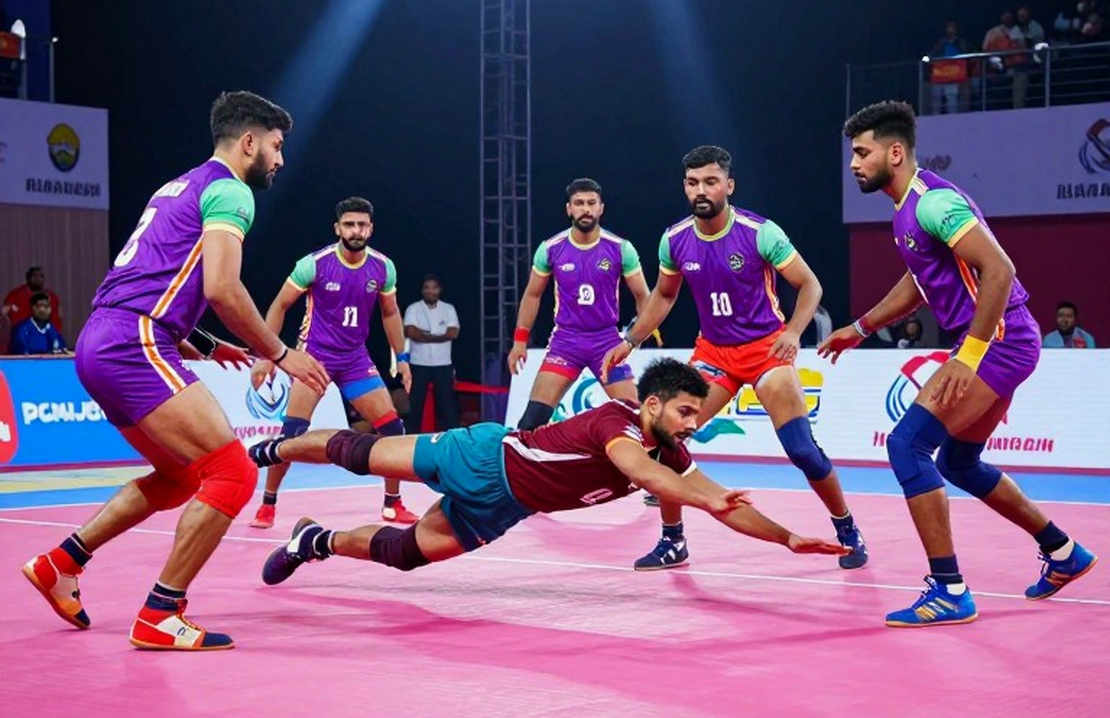
Context: what this semifinal is actually worth
Three lines cover enough rules for anyone new to the sport. A raider enters the opponent's half, must touch a defender and return within thirty seconds — return safely and the raid scores. The defense stopping the raider in its own half is a tackle, and it scores for the defense. When all of one team's players are out, that is an all out: the opponent takes 2 bonus points and the wiped-out side returns at full strength. That reset is kabaddi's most brutal rule, because a team is destroyed and revived in the same breath.
This match was a textbook of that mechanism. Nepal reaching a semifinal matters in itself, because at this level the women's field has rarely produced a third name beyond Iran and Chinese Taipei. Reaching a semifinal and surviving one are different things. India's raiding unit cracked Nepal's defense from the very first block, and India's defense kept putting an already-broken Nepal back on the mat.
The title match follows on Saturday, September 26, 2026, against the winner of Iran versus Chinese Taipei. If Iran advances, it becomes the tournament's only genuine stress test. If Chinese Taipei advances, India's gold is close to a formality. After more than twenty years around track and arena events, one habit has stuck with me: scorelines do not reveal form, pacing does. This semifinal's pacing says India has not yet touched its ceiling.
Why a 24-point margin is structural, not lucky
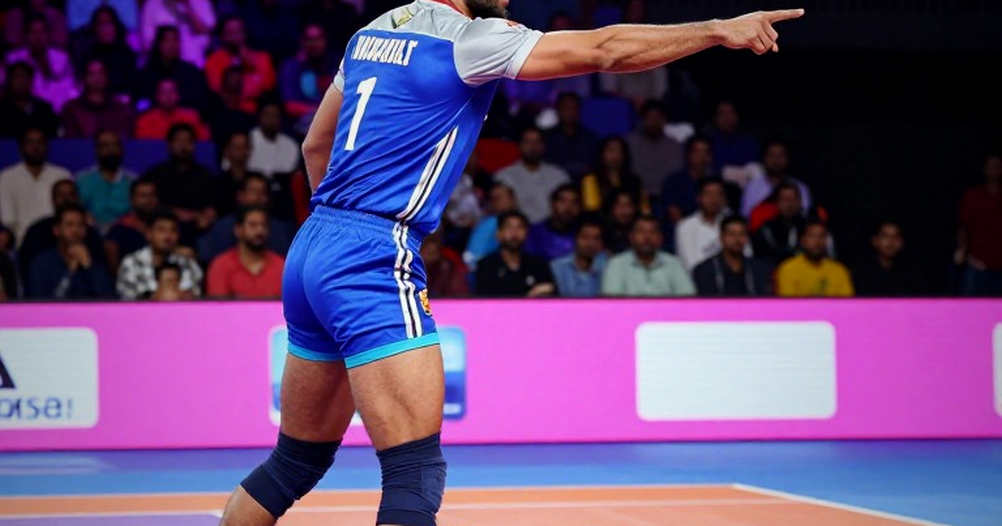
India forced three all outs, two of them in the first half. On the points sheet that reads as six points, but the value is far higher. Every all out hands the opponent back its full strength, and Nepal walked back each time into the same wall — a perfect flywheel for the stronger raiding side. The cycle turned twice before the break, and the lead reached 14 by halftime.
Of India's 35 raid points, 23 came inside the first twenty minutes. Add four bonus points, the reward for crossing the deep line in enemy territory while the defense still fields six or more players. Four bonus points mean India's raiders were not burning the clock with safe touches; they were pushing deep and taking risk. That is a stylistic signal worth more than the final margin.
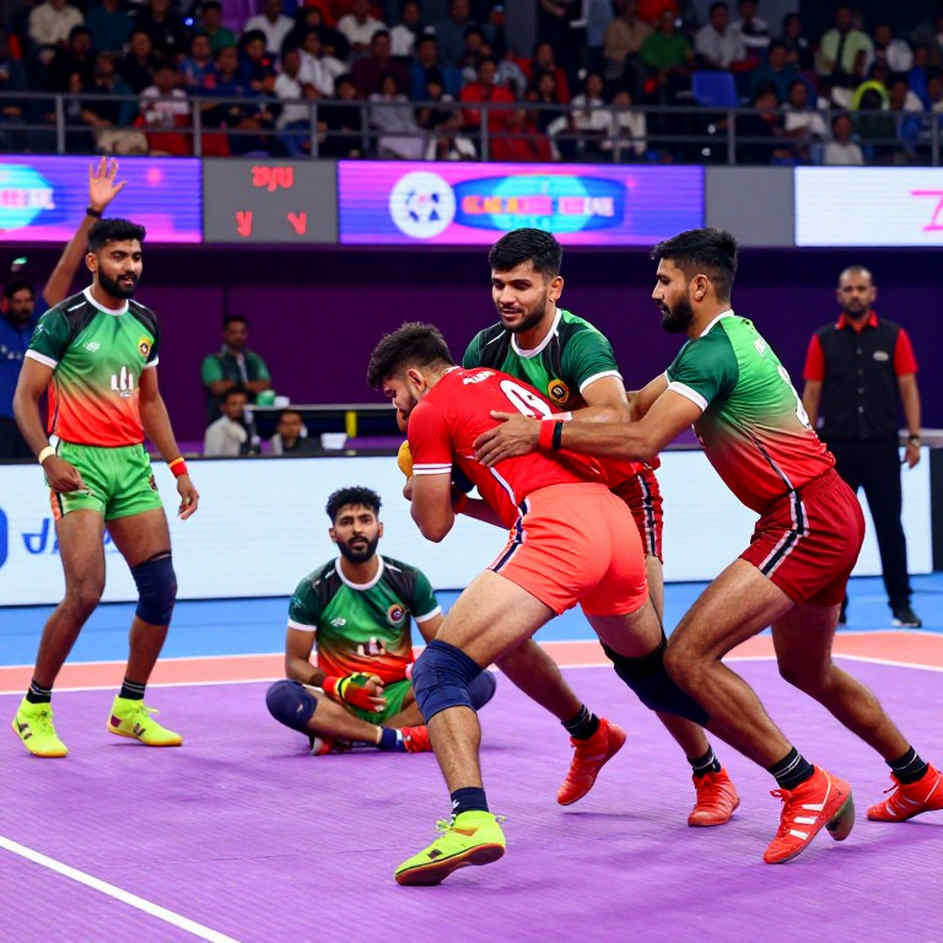
Individually, Sanju Devi is described as central to India's raiding threat, repeatedly breaking Nepal's line. The report gives no individual points, no successful-raid percentage. That is analysis's biggest hole. The question is not how many points, but what percentage of raids succeeded. The first is a statistic; the second is a capability. Taking volume as a proxy for efficiency is dangerous, even in a match with no counter-attack.
Nepal's side is more instructive. They took 13 touch points in the first half — no small achievement against India. In the second half that dropped to five. The collapse was not tactical; it was fitness and depth, semi-professional setup against a national camp. They also landed one super tackle, worth 2 points when made with three or fewer defenders on court. Such moments get amplified on television in a blowout, but they do not change a match's direction.
One data inconsistency stands out. The report at one point credits Nepal with "only 18 points," yet the final score is 48-24 and the half-by-half breakdown sums closer to 22. The 18 is almost certainly Nepal's touch points, mislabelled as a total. Treat 24 as authoritative and treat 18 as touch points only.
Contrarian read: what did a 24-point win actually prove?
The honest answer: very little. Nepal is not a top-tier opponent, and beating Nepal by 24 tests India's floor, not its ceiling. Nepal was 14 behind at the break, so the word "rout" conceals the first half's reality.
More important, India's defensive identity is still unproven. Three all outs look superb, but each arrived against a Nepal whose raiding had already collapsed. A defense-first identity is built by stopping a raiding attack that can actually threaten you — that test is held in escrow until Iran. No Indian defender is named in the report; Sanju Devi is. That is media framing at work: Indian kabaddi coverage personalises attack and collectivises defense.
And the biggest absent story sits nowhere in the scoreline — there is still no professional league for women. The men's Pro Kabaddi League launched in 2026, with franchises, an auction, prime-time broadcast. There is no equivalent for women. That is a failure, not a different context, and the cost is paid in short careers and insecure retirements. An Asian Games gold will not change it. Without structural change, the talent pipeline stays narrow, and Nepal in a semifinal is itself the evidence.
Looking ahead
September 26 is not just a medal match for India; it is a measurement. If Iran arrives, we will see how well an all-out-dependent model holds against a side that can plan and counter. Sanju Devi's individual efficiency will be examined on the record for the first time.
Even with gold in hand, one question will remain open after Saturday. If the arena fills on the day and women's kabaddi cannot be found again on Monday, then whose victory was 48-24?