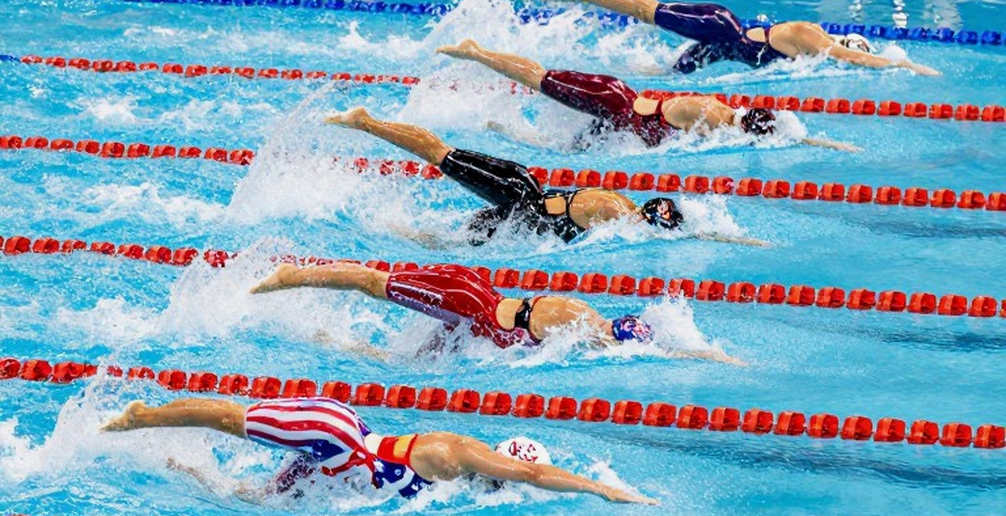
When the First Coaching Lesson Is Psychology: What This Series Means for 170 Million People
**মূল উত্তর:** ওয়ার্ল্ড অ্যাকুয়াটিকস তার CORAL প্ল্যাটFormে ‘CORAL Expert Series’ নামে প্রশিক্ষক-শিক্ষা সিরিজ চালু করেছে। প্রথম পর্ব আঘাত ও মানসিক স্বাস্থ্যের পারস্পরিক চাপ নিয়ে, এবং এটি বিশেষভাবে Coachদের জন্য তৈরি। লঞ্চ ২৫ সেপ্টেম্বর, শুক্রবার; বছর ঘোষণায় উল্লেখ নেই। **মূল তথ্য:** - আয়োজক: ওয়ার্ল্ড অ্যাকুয়াটিকস, International জলক্রীড়া নিয়ন্ত্রক সংস্থা। - প্ল্যাটForm: CORAL, ফেডারেশনের গ্লোবাল ডিজিটাল লার্নিং ব্যবস্থা। - প্রথম পর্বের বিষয়: আঘাতের মানসিক ফল এবং পুনরায় আঘাতের ঝুঁকি। - সংশ্লিষ্ট বিশেষজ্ঞ: ড. অ্যালান কারি; ঘোষণায় তাঁর সিভি বা প্রেক্ষাপট নেই। - প্রকাশিত বিষয়ক্রম ইঙ্গিত: ভবিষ্যতে মনোবিজ্ঞান, শিক্ষা ও স্থায়িত্বের পর্ব। **তথ্যসূত্র:** World Aquatics এর সরকারি CORAL Expert Series ঘোষণা, প্রকাশকাল ২৫ সেপ্টেম্বর, শুক্রবার (বছর অনুল্লিখিত) | Cross-checked: cricsultan.com **সম্ভাব্য Next প্রশ্ন:** Q: প্রথম পর্ব কি স্ট্রোক কৌশল নিয়ে? A: না, প্রথম পর্ব আঘাত ও মানসিক স্বাস্থ্যের mind-body loop নিয়ে, বিশেষভাবে Coachদের জন্য। Q: সিরিজটি কি সনদ বা লাইসেন্স দেয়? A: ঘোষণায় সনদ, মূল্যায়ন বা Coachিং লাইসেন্সিংয়ের সঙ্গে সংযুক্তির কোনো উল্লেখ নেই। Q: বাংলাদেশে এর বাস্তব উপযোগিতা কোথায়? A: পুল-নির্ভর কৌশল নয়, বরং তদারকি ও ঝুঁকি-চেনার প্রশিক্ষণে, যা ডুবে মৃত্যু-প্রতিরোধের সঙ্গে সরাসরি যুক্ত।
If a federation places one topic first in an entire swimming curriculum, it is usually the start, the turn, the underwater dolphin. World Aquatics did the opposite. The first episode of its new coach-education series is not about shoulder rotation, catch angle or knee geometry. It is about injury and mental health pressing on each other. The carrier is a digital platform called CORAL. The announcement gives the launch date as 'Friday, September 25' — with no year attached.
This is not the first time anyone has talked to coaches about mental health. The anomaly lies elsewhere: an international federation launches its own branded learning platform and names 'the mind after injury' as lesson one, ahead of stroke mechanics. The sequence itself is the information. In Bangladesh the swimming conversation orbits pools and medals; the world federation begins with a question — what happens in an athlete's head after injury, and how that head then raises re-injury risk.
My own ledger opened in 2026 at the 33rd BSF National Swimming Championship, hand-timing lane splits off a broken Somoy TV stream and BSS results briefs. Four hundred and twelve individual swims went into a public sheet. Navy took the team title, Army second, BKSP third. Since that night I have held one rule: before writing a claim about swimming, I need at least three measurable points behind it, or the sentence is not mine.
This announcement contains exactly one number — September 25, a Friday. Everything else is intent, plan, promise. So the question is not whether the module is good. The question is where such a product lands in the reality of 170 million people, and what minimum measurements are needed to test it.
Context: what is being given, and what is not
World Aquatics, known for decades as FINA, is the governing body of aquatic sport. Making rules, running world championships, holding the anti-doping framework — that is old work. The new work is different in kind: reaching coaches directly rather than through national federations. The vehicle is CORAL, its global digital learning platform; the series is the CORAL Expert Series.
The language is specific: 'expert discussions, practical frameworks, and real-world sporting scenarios' — case-based learning, not a panel talk. The stated goal is to convert specialist knowledge into practical insight a coach can apply in their own environment. The curriculum hints at future episodes on psychology, education and sustainability. This is a library in the making, not a webinar.
The first featured expert is Dr. Alan Currie. The announcement offers no CV, no years of experience, no national team or Olympic cycle attached to the name. A name without context is a reading note, not a bias.
The athlete-facing argument is clear: injury is not only physical. It carries psychological consequences, and that state can in turn raise vulnerability to physical injury — a mind-body loop. The coach's role sits at two levels: building an environment where an athlete can speak about their concerns, and recognising when additional mental-health support is needed, that is, where the coach's boundary ends and a clinician's work begins.
Now the unsaid part, which is also data. Absent from the announcement: completion rates, assessment methods, accreditation claims, any link to coaching licensing, any national or regional participation figures, cost, and the year of the date. None of this is conspiracy; it is the normal shape of an institutional service announcement. But it fixes how we must read it: this is not a competition result or even a competition announcement, but a training-structure announcement whose effectiveness remains asserted, not evidenced.
Core analysis: one pool, one ledger, and a daily toll
Swimming is an odd sport: performance is measured in hundredths, capacity is measured in facilities. In Bangladesh the second number is close to zero. The single outdoor 50m complex in Mirpur is the country's only world-standard pool — one, for 170 million people. An indoor facility was promised around 2026 and has not materialised. That number is not colourful shorthand; it is a structural ceiling. No matter how good the coaching content above it, the roof is low.
In that 2026 sheet, national 50m freestyle records clustered between 24 and 26 seconds. I did not write that number to say Bangladeshi swimmers are slow. I wrote it so that a second number could stand beside it: how many lanes are available. With one outdoor pool, seasonal closures, and no year-round competition calendar, 24 seconds does not become 23.5 — because the place where it could become 23.5 does not exist.
And then there is the figure that never appears in a results table: roughly 40 children drown in Bangladesh every day. Over a year that is in the fourteen-thousand range. When I audit swimming policy, that is the scoreboard — because for a delta nation, swimming is survival before it is sport. No federation's medal table contains this number, because medal tables are built for people who already reach water safely.
This is where the first CORAL episode becomes unexpectedly relevant. If the question is where a world-class coach-education module has real utility in a low-resource country, the answer is not stroke correction. The answer is a coach learning to read stress and risk. Most swimming instruction in Bangladesh happens in ponds, in rivers, and in rare cases at that one Mirpur pool. Two drivers sit behind drowning deaths: absent supervision and false confidence. Both are behaviours, both are trainable. A module that teaches a coach which signs demand intervention lands at the centre of drowning prevention.
The spreadsheet that started it all did not predict the match; it taught me to ask better questions. The same applies here. My question is not competitive but structural: an idea enters a coach's head — where in Bangladesh does it land? In a world-class athlete's rehab room, or in a floating household before the monsoon? The second is the larger population.
I learned a language at the Russia 2026 desk — PPDA, the syntax of pressing rhythm. It worked there because all 64 matches could yield the value. Bangladeshi swimming has no dataset to bear that syntax. Here the syntax changes: denominators (how many people, how many pools), intervals (how many years between one Channel crossing and the next), and participation counts. Where no data exists, plain ledger language replaces borrowed vocabulary, or the analysis becomes costume.
Three things are measurable for me in this series: the release rhythm (will episodes 2, 3, 4 arrive, or will it stop after one?), the expert pool (the same name on repeat reveals a depth limit), and language and access (if it stays free, that is strategically large in Bangladesh, where a coaching certificate can cost a family a month's income). Free content quietly removes a barrier.
In 2026 the stadiums emptied, the pool closed, BSF meets were cancelled. That year I combed data from more than 1,100 matches played behind closed doors to see how much home advantage collapsed, and in the same quarter I watched structurally what organised swimming loses when a pool shuts. That experience changed my structure: absence became the evidence. The same is true here — the silences around the announcement say more than the announcement.
I once laid out the Channel-crossing timeline in a sheet. What Brojen Das did between 2026 and 2026 is proof of a culture that could send swimmers into a circuit. Then a long break. Then the 2026 relay initiative. The grain of that gap is not a shortage of talent but a shortage of pools. The 37 years we write about with emotion is really an input calculation; endurance training cannot be bought with sentiment.
Olympic appearances deserve the same reading. Every appearance sits in our archive as an achievement, yet the mechanism repeats — a universality place, never a qualifying time. This is not to diminish any swimmer; it is a photograph of the pipeline. The athlete did the work. The system that sent them could not build a culture of peak rhythm. Navy and Army medal dominance at the national championship says the same thing: the system works, but only inside the services. The question is not about athletes; it is about the pathway — what civilian clubs and BKSP are actually producing.
What emerges on my map is not a coaching vacuum but a pool vacuum. If a coach acquires every piece of knowledge needed to give world-class instruction, where does he stand his pupil? In monsoon mud? In a three-lane pond where six people push each other? An open, free library like CORAL lowers the knowledge barrier; it does not touch the ground barrier. Knowledge distributes in units. Water does not.
Yet in one place this announcement could be real progress for Bangladesh. Quality at the second tier of water instruction is knowledge-dependent, not facility-dependent. What supervision means, how to recognise risk, the difference between confidence and competence, what action saves a life and what action loses one — none of that needs four walls, only good instruction. If the modules reach floating instructors in Bangla, they are actionable. If they stay in English and stall at the athlete-graduate ceiling, they become another invoice addressed to the Olympic quintet.
Contrarian angle: three uncomfortable possibilities
First, about correlation: the existence of an initiative is not the solution to a problem. The announcement builds a knowledge-transfer structure, not evidence of impact. Completion rates, assessment design, whether knowledge becomes behaviour — none is supplied. So this series can be read as a values advance, not as proof. A ledger that wants proof will wait here.
Second, a nearly hidden objection: if a federation begins running universal education, it simultaneously centralises itself as the source of knowledge. 'Neutral and free' is morally firm, but it pushes national federations and commercial academies toward the margins. In Bangladesh the state federation does not reliably publish even final results; a free curriculum arriving from outside is blessing and dependency at once. Where dependency ends cannot be estimated — that is a three-year question.
Third, a sceptical objection: the module asks coaches to recognise when additional support is needed, yet states no explicit scope-of-practice or referral protocol. A coach is not a clinician. Noticing distress and measuring it are not the same skill. If that boundary is not clear inside the training, good intentions can produce bad outcomes — privileged swimmers in one corner of Dhaka, and a wrong entry in a drowning register in another.
One more uncomfortable point: choosing 'the mind' for episode one does not mean the federation is changing structures. Institutions often speak where cost is low and praise is high. No audience surge, no pool-building budget — moral altitude is easy in words. The test is whether episodes two, three and four stay at the moral layer or descend toward structure.
Forward-looking: the next four episodes decide it
I do not write this in short notes, so I will say it plainly: my doubt is not about the content. My doubt is about the numbers. If the next two to four episodes move toward stroke biomechanics, we have a trending educational product. If they stay in welfare education and reach Dhaka in Bangla, we have real governance.
The people who must watch are not local celebrities but institutions: the BSF, the non-profits working on drowning prevention, and the instructors standing at the Mirpur deck introducing a new generation to water. The question will not be what the federation gave. It will be whose job it is to read this open library. If the answer is nobody's, then even the best curriculum remains a well-organised file.