
The Lower Boards of Samarkand: India's 5/5, the Missing Ratings, and the Arithmetic of Five Rounds Left
**মূল উত্তর:** ভারতের নারী দল সমরকন্দে চেস অলিম্পিয়াডের ষষ্ঠ রাউন্ড পর্যন্ত নিচের বোর্ডের স্কোর দিয়ে ম্যাচ জিতছে। সাভিথা শ্রীর পাঁচে পাঁচ এবং ভান্তিকা আগরওয়ালের চার দশমিক পাঁচ প্রধান ভর। শীর্ষ দুই বোর্ড ষষ্ঠ রাউন্ডে ড্র করেছিলেন। পাঁচ নম্বর রাউন্ডে সাভিথা বিশ্রামে থাকলে ভারত পোল্যান্ডের কাছে হারে। **মূল তথ্য:** - সাভিথা শ্রী পাঁচ খেলায় পাঁচ জয়; প্রতিপক্ষ রোজ অ্যাটওয়েলের বিরুদ্ধে জয় এসেছে ৪৭ চালে - ভান্তিকা আগরওয়াল পাঁচ খেলায় চার জয় এক ড্র; একটি জয় ইরিনা ক্রুশের বিরুদ্ধে - Coach গ্র্যান্ডমাস্টার অর্জুন কল্যাণ; ভারতের অন্যতম সম্ভাব্য প্রতিপক্ষ জর্জিয়া, কাজাখস্তান ও চীন - সূত্রে সাভিথা শ্রী বা প্রতিপক্ষের কোনো Rating উল্লেখ নেই, তাই পারফরম্যান্স Rating হিসাব করা যায় না **সূত্র:** ChessBase India লাইভ স্ট্রিমের দুই উদ্ধৃতি, ফটো ক্রেডিট Rafal Oleksiewicz/FIDE; প্রকাশের তারিখ সূত্রে উল্লেখ নেই, ভেন্যু ও সময় নিয়ে অভ্যন্তরীণ অসঙ্গতি আছে। চলমান ইভেন্ট, তাই তথ্যের মেয়াদ কয়েক দিনের। **সম্পর্কিত প্রশ্নোত্তর:** প্রশ্ন: সাভিথা শ্রীর পাঁচে পাঁচ সত্যিই অসাধারণ? উত্তর: ফল নিশ্চিত, কিন্তু প্রতিপক্ষের Rating না থাকায় পারফরম্যান্স Rating দিয়ে যাচাই করা সম্ভব নয়। প্রশ্ন: রাউন্ড বাকি থাকতে ভারতের সোনার সম্ভাবনা কত? উত্তর: পাঁচ রাউন্ডের তিনটিতে জর্জিয়া, কাজাখস্তান ও চীনের মুখোমুখি হওয়ার সম্ভাবনা থাকায় শীর্ষ বীজ হিসেবে সুযোগ আছে, তবে সবচেয়ে কঠিন অংশ শুরু হয়নি।
The camera was on the wrong board. The match was decided on another.
In the tournament hall in Samarkand that night, India faced the United States, and the light of the live broadcast was stuck on the top two boards. Koneru Humpy on one, Divya Deshmukh on two, both drawing — slow, calm, almost ceremonial. Meanwhile the arithmetic of the match was being written far below.
Savitha Shri, nineteen years old, playing her first over-the-board Olympiad for India. Opposite her, Rose Atwell. Forty-seven moves later the game was decided in her favour. On the next board Vantika Agrawal was beating Irina Krush. Two wins, two draws, the match won.
Read that far and the story looks simple: a young star carrying her team. The headline agrees — five wins in five games, the backbone of the women's team. I would not use the word backbone. A backbone is the board that still holds when the others go cold. Calling a nineteen-year-old the backbone after six rounds means loading an entire federation's weight onto one head.
There is a fact the headline left out. In round five Savitha Shri was rested. That was the round India lost, to Poland. Put those two sentences side by side and the story stops being about a heroine and becomes one about the coach and the selection.
The pitch remembers what the camera missed. In board terms: a team match is always decided on the board where no light falls.
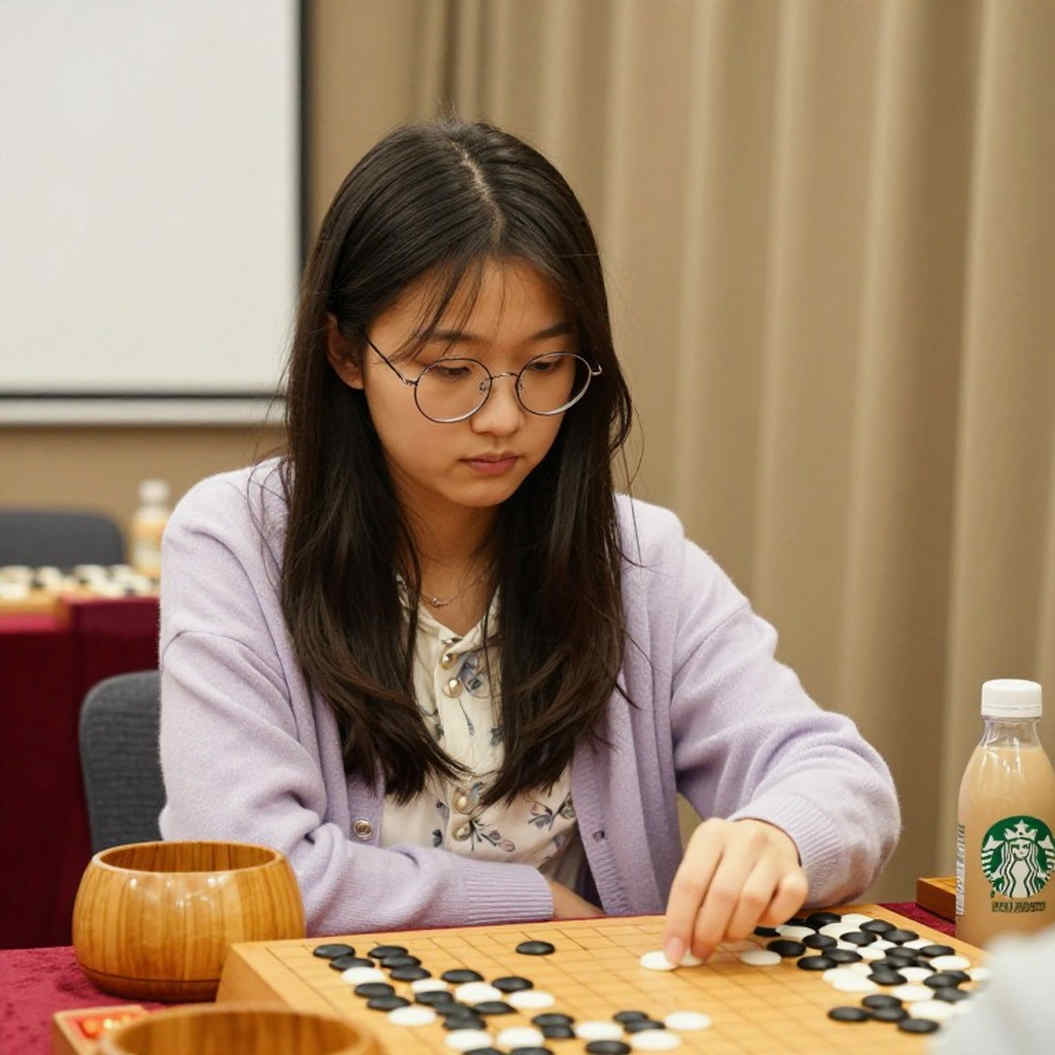
Most Bengali readers still cannot place the Chess Olympiad, because it does not fit cricket's measurements. It is FIDE's largest team event, held every two years, with separate open and women's sections, five players per team, four boards per match, the fifth player a reserve. Eleven rounds of Swiss. Round six means exactly half the tournament is gone and five rounds remain — the most decisive third has not yet begun.
One structural fact is almost never written in Bengali or Hindi coverage. Olympiad standings are ordered by match points — two for a win, one for a draw, zero for a loss. Board points, the sum of four individual games, appear only among the tiebreaks. A 2-2 match is a drawn match; there is no rapid playoff, no blitz drama. Which means, in the match ledger, two draws on the top boards and two wins at the bottom carry the same weight as anything else, if the total is equal. Individual beauty is not the currency here. Match points are.
India's squad currently reads: Koneru Humpy on board one, then R. Vaishali, Divya Deshmukh, Savitha Shri, Vantika Agrawal. Two young International Masters, one veteran anchor, and a Grandmaster coach, Arjun Kalyan. Savitha Shri has five wins from five. Vantika Agrawal has four wins and a draw from five. In round six the top two boards drew and the bottom two won. In round five India lost to Poland.
The list of rivals carries an implication nobody states outright. Georgia is seeded two, Kazakhstan three, China four, the United States five. Name those four and stop, and the silence supplies the answer: India entered as the top seed in the women's section. That makes the Poland defeat an upset rather than a routine loss. And if the team is still written about in survival language after it, that too is information.
A word about the source, because it is a weakness rather than a strength. The report carries no byline, no source attribution for any figure, and an internal inconsistency of time and place. Its core consists of two quotes lifted from a live stream. No game scores, no openings, no engine data, no opponent ratings. What we have is a list of results and fragments of speech. Keep that limitation in mind; the rest of the argument depends on it.
I write from Saint Petersburg, and I watch these events on a broadcast, not from a board-side chair. In 2026 a streaming platform handed me a headset for the FIDE World Cup in Tbilisi — a 128-player knockout across twenty-five days, no studio, no producer, only a laptop and a chat window scrolling faster than I could read. When Levon Aronian broke Ding Liren in the rapid tiebreak, I was explaining to a schoolteacher in Khulna why a king cannot be captured. That is where I learned to write for a room I cannot see.
India is currently winning through depth rather than dominance — and a nineteen-year-old reserve's 5/5 is simultaneously the clearest evidence of that structure and the least verifiable.
Start with the unverifiable part, because it is the most routinely skipped. Five wins is a result. A performance rating is a calculation, and it requires her rating and her opponents' ratings. Neither appears anywhere. We know an outcome; we do not know a strength level. That distinction is the oldest trap in sports journalism: results and ability are not the same thing, and the rounder a number looks, the easier it becomes to explain.
What can be inferred is team management. A player is normally placed on boards four or five against comparable or weaker opposition, where the rating differential favours her. A perfect score at the bottom therefore often means correct match-ups and good execution rather than a talent explosion. That should not be dismissed — a team's greatest skill is putting its best form in front of the right opponent. But it cannot be written up as history.
The only in-game datum the source provides is forty-seven moves. That number deserves care. Forty-four or forty-five moves would suggest a tactical miniature, pieces flying. Forty-seven moves means technique, positional patience, slowly squeezing someone — the normal shape of a lower-board win in a classical team event. One data point. Enough for direction, not for proof.
Now the structure. India's scoring distribution in round six was two draws at the top, two wins at the bottom. If the stars sat on the top boards and the points came from there, the story would be about leadership. When the first board stays quiet and the points arrive from boards three and four, it is unambiguously a story about depth — a squad whose middle and lower boards are outperforming their ratings. That is admirable, and the danger hides inside the admiration.
Depth protects you only when the opponent has less of it. Georgia, Kazakhstan and China do not typically field a fourth or fifth board who hands over a full point. That is where this model gets tested, and we should set our expectations before it is tested. Three of the five remaining rounds plausibly come against those three seeds — if the lower boards cool there, it is evidence about the opposition, not a collapse in form.
One statistical truth belongs in the frame, though tournament reports rarely carry it. Regression from a perfect score is arithmetically certain — not a matter of temperament, but of arithmetic. One and a half points from four rounds after 5/5 is roughly the rule, and media will describe it as a slide. The responsible thing is to build the explanation now: that is where the score stops being a star and becomes an accounting line.
Here is the counter-intuitive truth the headline buries. The highest-quality result on this team is not Savitha Shri's. It is Vantika Agrawal's. Against Irina Krush — an American pillar, a multiple-time national champion, a name with history. A win against a name needs no explanation. A perfect score against opponents we cannot name does. On quality, 4.5 with a scalp beats 5 without one, and the headline wrote the opposite.
A small but real correction is needed here, because facts degrade as they travel. The source calls Krush a Grandmaster. In FIDE's records she is an International Master — a serious player, but not a GM. This may look like a detail. It is not. Titles are the currency in which lower-board victories are weighed, and getting one wrong misprices the best win the tournament has produced.
The coach is the real story, and it is the one piece of news nobody filed. Arjun Kalyan is a winning Grandmaster, and he is coaching this women's team. That matters. Assigning a working GM to a national women's squad is an institutional signal — the women are no longer a second-class budget line. What I see more often is the retired star opening an academy with his own name on the board and calling the work done. That is a branding exercise, not coach education. A child needs a salaried coach taking class seven days a week, and a federation willing to put a coach's name in the national team budget. India has that. It is the durable arrangement.
The coach's quote is also data. He says India had lost to that opponent twice before at the Olympiad and still won gold at the end. Psychologically that is a tonic. Structurally it says something more: this squad has an established recovery script. In an eleven-round Swiss, that is a serious asset. Losses happen; a team without a script breaks at the first one.
And read the player's own words carefully. She says that if something had gone wrong, there would have been no chance of winning a medal. That is not a confidence quote. It is a pressure quote, a nervousness quote, a last-resort quote. When a nineteen-year-old frames her team's prospects inside a zero-or-one binary in the middle of a tournament, the media's job is to count, not to celebrate.
Age matters here, and I say this from experience. Nineteen is not the age at which people break under gold-medal expectation, and it is not fifteen either. It is an elastic middle zone. The greater danger is not the opponent but sudden stardom. When a result becomes a name, the phone rings, cameras ask, brands call — and within weeks the practice hours fall to zero. Nobody writes that ledger.
I live in Moscow, so I see both sides of the system daily. Here, chess is a profession: a classroom, a salary, a step-by-step school pipeline, a coach who is a trainer by trade, a federation for which a national-team shortfall is an administrative failure rather than a point of pride. In Saint Petersburg nobody needs telling that chess is a job; it starts in a government payroll queue. There is cruelty in this system too. But looking from here toward Bangladesh, the missing thing is not talent. It is employment.
My own notebook runs from 2026, when a teenager from Dhaka became South Asia's first Grandmaster, a full year before India's. I was there in the print era. The moment was not small. What followed diverged. India built a machine of schools, coaches, scholarships and decades of system. We built a statue. The statue is beautiful, photographic and functionally useless, because a statue cannot teach.
Put the number down plainly, because arithmetic outworks sentiment. Bangladesh has five Grandmasters in total. The fifth, Enamul Hossain Razib, earned the title in 2026. That is seventeen years of gap, and the gap is not an accident — it is a budget line. The federation runs on roughly eleven lakh taka a year, less than a single franchise cricketer's bat sponsorship. One cricket comparison is enough; the problem is not chess versus cricket, it is who gets paid what.
At the two ends of that thin pipeline stand two men telling the same story from opposite directions. Niaz Murshed, taking his seventh national title at fifty-nine. Manon Reja Neer, unbeaten national champion at fourteen. Three decades separate them, and if you open the ledger you find we never built a generation — only a teenager and a man approaching sixty, with an empty space between them. That empty space is the real crisis. And Rani Hamid still winning Olympiad games in her eighties is not only extraordinary; it is also the long life of one thing filling the absence of another. Statues outlive history, because history needs a system and a statue needs only a square.
Hold that mirror up to Samarkand. Koneru Humpy is still on board one, still drawing calmly. To me she is both an exemplar and a warning. Her results need no defence. But when a national team's first board has carried the same name for over a decade, that is not a testament to stability — it is a succession question. And succession never arrives from beneath a statue. It arrives from a classroom, a salary, a calendar of norm tournaments nobody cancels.
This is why the names Savitha Shri and Vantika Agrawal matter. They are not results; they are testimony. Testimony that someone stands beside board one, and that a nineteen-year-old can play five Olympiad games. It is what should have been done with Neer in Bangladesh. The difference is that there the story is carefully framed, and here it begins to be written on a tablet.
Which is where my objection to the word backbone returns. A backbone is not the person who delivers points in good times. A backbone is the person who holds half a point on a bad day, on board one, outside the camera's frame, while the team is losing the match. Calling anyone a backbone after six rounds means building a team's frame around twelve games. Good-time numbers do not make a backbone.
Now the gap everyone will fill with the wrong answer. In round five the coach rested Savitha Shri, and India lost that round. The easy verdict: the rest was a mistake, the in-form player should have played. I do not reach that verdict. This is an eleven-round event; a reserve exists to be used. Playing a teenager in every round would leave nothing to sit down calmly with in the final four.
The real answer is more uncomfortable. The team did not lose because its in-form player was resting; it lost because of her absence. When one person's day off makes the whole team's collapse inevitable, that is not a coaching problem. It is a depth problem. Everyone will quote the clean line — India's only defeat came in the round its lower boards could not save — without noticing what sits inside: nobody else on this roster can hold that many decimal points.
I know the reflex: with five rounds left, the door to gold is ajar. In my reading the door is not open, it is narrow. The three teams coming are the biggest threats to India's lower boards precisely because they have real depth. If India's chief weapon in those matches is the coach's selection policy, the contest will be decided between the coach's decisions and the scoreboard, not outside it.
There is one quiet procedural note worth recording. Israel's matches were moved earlier for Yom Kippur, and Singapore and Colombia agreed. In an eleven-round Swiss that is difficult coordination, and it says something about administrative competence. It will never make a headline, but an event that stays movable is a healthy event.
Another silence concerns anti-cheating. There is no allegation, no investigation here, and that is good news. Absence of complaint is not absence of measures. Device screening and broadcast delay are standard at the Olympiad; the quiet is not missing information, it is an absent problem. Chess's credibility rests on that transparency from first move to last.
The source deserves one further sentence. Every field in it is empty, it carries no byline, and it contains an internal inconsistency of place and time — Samarkand as the current venue, Budapest invoked as prior context, and the coach's phrase 'last year' returning in the quote. Three elements that cannot all be reconciled. That inconsistency is itself the most important information in the file, because it shows what happens to numbers when their scaffolding is weak. The only answer is to proceed knowingly.
Two pitches, one year, and the quiet arithmetic of who gets to stay.
In 2026 my own city hosted the football World Cup — eleven cities, fan zones, eighty-thousand-seat stadiums. In September I flew to Batumi for the 43rd Chess Olympiad, where China's men and women both took gold, the first such sweep since the Soviet era, and where more than 180 federations assembled with almost no cameras. Bangladesh sent a five-board open team and a women's team still leaning on Rani Hamid, then in her mid-seventies. I wrote one essay about both: Two Pitches. The loud one needs no poet. The quiet one does.
The subtraction arrived in 2026. No stadium anywhere I worked. From my Saint Petersburg kitchen I called the FIDE Online Olympiad in August — an India-Russia final that did not end in checkmate but in a disconnection, both teams declared joint gold, thousands of fans asking whether a result counts if nobody touched a board in the same room. In Dhaka the Premier Division Chess League went dark and players with day jobs stopped receiving match fees. I spent July interviewing them about rent.
Since that year I have written in a different order. Fans before Grandmasters. Board before broadcast. It helps most in chess, where the central problem never changes: most of what happens on the board, nobody sees.

So I am not willing to read this report's result as a simple victory. A national team that draws on the top boards and wins matches at the bottom carries a hidden arrogance in every win. That arrogance has not broken yet, because the opposition has not been strong enough. It breaks the day the other side's lower boards are also solid.
India's women's team right now is not a great team; it is a deep team. Depth is measured in time. India's advantage here is a decade, not a year. Bangladesh's problem is not a season's crisis; it is three decades of looking away.
A rating list protects nobody. A pipeline does.
That sentence applies most of all to Savitha Shri, a nineteen-year-old who has become her team's largest expectation after six rounds. She has won five of five. I am not diminishing that. I am saying that 5/5 is a result, not a future. Turning results into futures is the work of coaches, federations, sponsors — and of us.
The question India faces now is not whether Savitha Shri will win gold. It is whether, having found a Neer or a Savitha Shri, there will be a coach waiting. A gold medal is tournament news. A coach is thirty-year news. What lasts is not the trophy; it is the nineteen-year-old built properly.
One more thing, and I cannot say it gently, because it comes from seventeen years of watching the ledger. If gold comes, it is relief for India. If it does not, it is not a crisis, only arithmetic. A top seed can lose a big event; that is the norm in chess history. But in Bangladesh these numbers will be read by sixty million people in a language where the game still lives in a legal gap. What happens here is priced differently there.
What we know after round six is a nineteen-year-old with five wins, a team with four draws and a loss, and Georgia, Kazakhstan and China waiting. Beyond those dozen games lies the next page of a thirty-seven-year chess story.
The remaining five rounds will tell us whether this was a spine or a spike. My guess is that it lands near gold, and that in the moment it does not, everyone will forget this arithmetic. But I want to remember one night — round six, when the hall's cameras were on the top boards and the match was written far below, where nobody had been sent to broadcast. One day a board will become history precisely because no camera was there, and no one will keep the account. The board remembers what the microphone forgets. The only real regret is this: the day this sport learns to count, nobody will be counting.