
Three All Outs, Zero Collapses: Inside India's Unbeaten Asian Games Chapter
**মূল উত্তর:** এশিয়ান Games ২০২৬-এর পুরুষ কাবাডি গ্রুপ পর্বে ভারত চাইনিজ তাইপেকে ৩৭-২১-এ হারিয়ে গ্রুপ এ-তে অপরাজিত শীর্ষে উঠেছে। ভারত তিনটি অল-আউট পেয়েছে, কিন্তু নিজে একবারও অল-আউট হয়নি। সেমিফাইনাল ২৫ সেপ্টেম্বর ২০২৬। **মূল তথ্য:** - ভারত ৩৭ পয়েন্ট পেয়েছে; এর মধ্যে বোনাস মাত্র ৩ এবং তিনটি অল-আউট থেকে ৬ পয়েন্ট। - চাইনিজ তাইপে ২১ পয়েন্ট পেয়েছে: ৯ বোনাস, দুই সুপার ট্যাকল থেকে ৪, বাকি ৮ ছড়ানো। - বিরতিতে স্কোর ছিল ২৩-১১; পুরো ম্যাচে ভারতের রক্ষণ একবারও ভাঙেনি। - দ্বিতীয়ার্ধে রেইডিংয়ে নামেন দেবাঙ্ক দালাল ও আয়ান লোচাব; রক্ষণে আসলাম ইনামদার ও রাহুল শেঠপাল। - পুরুষ কাবাডির সেমিফাইনাল ২৫ সেপ্টেম্বর ২০২৬; ভারত গ্রুপ এ-তে শীর্ষে। **সূত্র:** Khel Now — এশিয়ান Games ২০২৬ পুরুষ কাবাডি গ্রুপ পর্বের ম্যাচ প্রতিবেদন, সেমিফাইনাল ২৫ সেপ্টেম্বর ২০২৬-এর আগে প্রকাশিত | Cross-checked: cricsultan.com **সম্ভাব্য অনুসরণীয় প্রশ্নোত্তর:** প্রশ্ন: ভারত কি এই ম্যাচে অল-আউট হয়েছিল? উত্তর: না — পুরো ম্যাচে ভারত একবারও অল-আউট হয়নি, যা রক্ষণের স্থিতিশীলতার সংকেত। প্রশ্ন: চাইনিজ তাইপে কীভাবে ২১ পয়েন্ট পেল? উত্তর: প্রধানত বোনাস লাইন (৯ পয়েন্ট) ও দুই সুপার ট্যাকল (৪ পয়েন্ট) থেকে, গভীর রেইডে নয়। প্রশ্ন: ভারতের পরের ম্যাচ কবে? উত্তর: ২৫ সেপ্টেম্বর ২০২৬-এ সেমিফাইনাল, যেখানে সম্ভাব্য প্রতিপক্ষ ইরানই প্রকৃত পরীক্ষা।
The moment is still fresh in my notebook. The half-time whistle blew with the board reading 23-11. Thirty-four points in twenty minutes — in kabaddi that pace means both defences are cracking, and one of them keeps cracking. I drew two lines under a single sentence: “India has not been all out yet.” By full time, that line had become the biggest fact of the match.
India beat Chinese Taipei 37-21 in the men's kabaddi group stage at the Asian Games 2026, topping Group A unbeaten. The scoreline is glossy. But the notebook remembers the season the crowd forgets — and what gets forgotten here is not the 37, but the arithmetic inside the 21.
Kabaddi's mechanics have to be laid out first, because the score only makes sense through them. A raid: the attacker enters the opponent's half and must return within thirty seconds; touching a defender and getting back safely scores. Throughout the raid the raider must keep chanting “kabaddi” — the cant — and if the chant breaks, the raid is void. Defenders who collectively stop the raider complete a tackle, which is where defensive points come from. When all seven players of one side are ruled out, that is an all out: the opponent gets two points and the wiped side revives in full. The deep line in the opponent's half is the bonus line; crossing it while six or more defenders are on court earns one point, the cautious raider's safety valve. A tackle completed with three or fewer defenders on court is a super tackle, worth two — the classic momentum-reversal tool.
The Asian Games uses standard style, on a rectangular court, across two twenty-minute halves. The semi-final is on 25 September. The report comes from the Indian digital outlet Khel Now, and it is the only source, so the arithmetic has to be laid out openly rather than skipped on the way to a conclusion.
The real question is how much information a group-stage result actually carries. India top Group A unbeaten and have their semi-final ticket. But one truth has held in Asian Games kabaddi for years: India at the top, and Iran as the only genuine challenger. An easy group win does not move that structure; it only deepens its shadow.
Of India's 37 points, only 3 came from the bonus line. Roughly 28 came from touches and tackles — the profile of a penetration-oriented raiding side, not a safe-bonus accumulator. Years of watching have taught me that this distinction reveals a team's character. A side leaning on bonus points protects a result; a side that raids deep controls a match. India played like the second kind here.
Six of the 37 came from three all outs. India emptied Taipei's roster three times, and that mechanism is exactly what turns an ordinary lead into a large one. Teams in kabaddi do not lose by big margins because they played “badly”; big margins appear when the restart mechanic works for one side.
Now the real discovery, the one the scoreboard withholds. Of Chinese Taipei's 21 points, nine were bonus points, four came from two super tackles, and eight were spread out. That is roughly 43 percent of their scoring through the safe one-point channel — and not a single point from an all out. Read it the other way and it says this: India were never all out across the entire match. The defence never collapsed.
This is where the notebook's most useful line arrives. I learned to hear the game when the stands fell silent — and here the silence sat in India's defence. Taipei's raiders did not risk deep entry against ankle holds and chain tackles; they stopped at the bonus line. That is not shame, it is survival arithmetic. Weaker sides stay alive against stronger ones by taking the single point rather than the deep raid, keeping the score respectable.
Still, there was a crack in India's ledger, small but real. Two super tackles mean India's raider was caught twice when Taipei had three or fewer defenders on court — situations where a point, and often the all out, are expected. In those two moments the raider hunted for a touch instead of taking the safe route. That is a small finishing-discipline gap, and against a defence like Iran's it can widen.
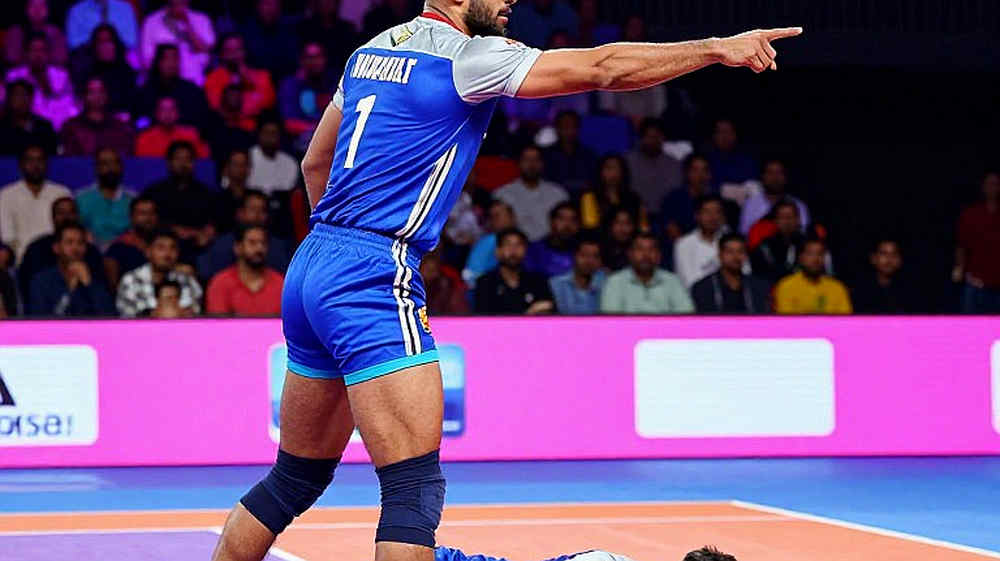
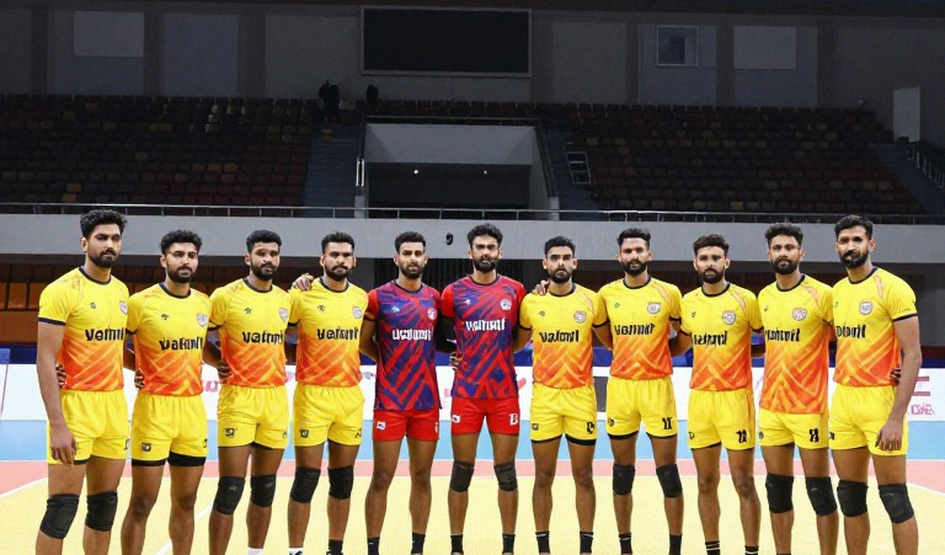
The defensive core was Aslam Inamdar and Rahul Sethpal on the right corner, with Sethpal's ankle holds controlling the early phase. In the second half Devank Dalal and Ayan Lohchab came in to raid — a clearly managed, rotated approach. To my eye this is the real Asian Games signal: before the semi-final, India reduced the load on its raiders and tested squad depth. Data did not replace my eyes, it taught them where to look — and it says the structure is solid even when the name list lacks star glitter.
One absence is worth noting too. The do-or-die raid never appears in the report. After two consecutive scoreless raids, the third becomes do-or-die; failing to score puts the raider himself out. That situation barely arose here because India's raid efficiency was high. A silent data point is still a data point.
From Taipei's side, one name should be remembered: Chung-mao Chang, whose ankle hold landed during their attempted comeback. That tackle plus the two super tackles show their defence came to compete, not merely to participate. Twenty-one points is not mere presence — it is small but real progress for a side outside South Asia. If kabaddi is to grow beyond the India-Iran duel, scorelines like this are the raw material.
There is another layer the group-stage score does not touch. Kabaddi runs two separate economies: the prestige economy of the national team, and the commercial economy of the Pro Kabaddi League, whose engine is the auction, the broadcast and the season calendar. This match barely connects to the second. A group win over a catch-up-tier side does not move league markets or transfer pictures. The two economies stay loosely joined — that is kabaddi's structural trait.
Where India's depth comes from also matters. Haryana, Maharashtra, Punjab, Uttar Pradesh, Tamil Nadu — the national team's framework is built from those five regions, and the league gives it a professional mould. No other country combines the two. So a group-stage win is nothing new for India; it is the routine output of a structure.
Now the part that demands caution. The “unbeaten run” headline is accurate but analytically hollow. Beating a catch-up-tier side in the group stage is expected, and such wins tell us very little about India. The simple truth is that 37 points does not mean high efficiency. The source gave only aggregate points — no raid success rate, no individual totals. Confusing volume with efficiency is the sport's oldest mistake, and I will not make it.
Second, a safety-first, bonus-reliant opponent means no genuine pressure is created. Taipei's 43 percent bonus share is not a hard test of India's defence. The real test is Iran, and that does not show up in this scoreline. The semi-final is the only benchmark that will reveal whether India's penetration raiding holds against a high-grade chain defence.
Third, there is no post-match injury information. Kabaddi is a high-contact sport — knees, ankles, shoulders. The second-half rotation is therefore not mere comfort; it may be deliberate workload management. Only the semi-final team sheet will show whether India field full strength. One more caution: a sport like kabaddi is negotiated onto multi-sport programmes cycle by cycle; that should be verified rather than assumed.
A season is not a story until the notebook closes — and this notebook is still open. The semi-final on 25 September, and a likely India-Iran meeting, will fix the true value of this unbeaten chapter. If India's raiders are again caught hunting touches against a depleted defence in front of Iran's cover, then today's 37-21 is nothing more than a tidy lead.

Related Players
Recommended
The Autopsy Starts Where the Applause Stopped: The Kabaddi Warning Nobody Is Reading at the Asian Games2026-09-24
48-47: The One-Point Maths and the Real Ledger of Asian Games 2026 Kabaddi Day One2026-09-24
The Ledger Says 49–24, but the Real Asian Games Story Is Hiding in Iran2026-09-30
The One-Point Ledger: India's Dominance Is Untested, Chinese Taipei Is the Real Signal2026-09-24
48-47: The One-Point Trap and the Tactical Geography of Asian Games 2026 Kabaddi Day 12026-09-24
India 48–Bangladesh 25: The Bonus-Line Ledger That Exposed India's Defence2026-09-24
Recommended
48-47: The One-Point Trap and the Tactical Geography of Asian Games 2026 Kabaddi Day 12026-09-24
Five Editions, Three Different Finalists: The Women's Kabaddi Asian Games Story Nobody Filed2026-09-28
The Kabaddi Ledger: Where Iran Waits, India's Cover Already Cracks2026-09-24
Six Feet of Leap, Thirty Seconds of Clock: How Much of Pawan Sehrawat's 'Hi-Flyer' Raid Is Weapon and How Much Is Trap2026-09-24
India 48–Bangladesh 25: The Bonus-Line Ledger That Exposed India's Defence2026-09-24
48-47: The Story the Asian Games Kabaddi Table Does Not Tell2026-09-24
Recommended
Not 49-24, But Eight Out of Nine: What India's Win Over Japan Didn't Say Is the Loudest Thing in the Report2026-09-24
Cold Court Arithmetic: The Scoreboard Never Told the Real Story of Bangladesh's Asian Games Kabaddi Semi-Final Miss2026-09-30
48-47: The Story the Asian Games Kabaddi Table Does Not Tell2026-09-24
The One-Point Ledger: India's Dominance Is Untested, Chinese Taipei Is the Real Signal2026-09-24
India 48–Bangladesh 25: The Bonus-Line Ledger That Exposed India's Defence2026-09-24
48-47: The One-Point Trap and the Tactical Geography of Asian Games 2026 Kabaddi Day 12026-09-24
Recommended
Asian Games 2026: Indian Men's Kabaddi Team Seals Semi-Final Spot with Win Over Bangladesh2026-09-30
Six Feet of Leap, Thirty Seconds of Clock: How Much of Pawan Sehrawat's 'Hi-Flyer' Raid Is Weapon and How Much Is Trap2026-09-24
India Won 48-25, but the Real Number Was Bangladesh's Eleven Bonus Points2026-09-24
Five Editions, Three Different Finalists: The Women's Kabaddi Asian Games Story Nobody Filed2026-09-28
Asian Games 2026 Kabaddi Semifinals: What India's 'Unbeaten' Run Is Hiding2026-09-28
Two Wins by Five Points: The Inside Math of Bangladesh Topping Their Group at the Asian Games Kabaddi2026-09-24